Vientiane · Laos
Where French Classicism Meets Lao Mythology.
PatuxaiVictory Gate
Vientiane's monumental war memorial — a Lao reimagining of the Arc de Triomphe, crowned with mythical kinnari and opened to panoramic city views.
At a glance
Patuxai
Victory Gate · Vientiane
Calculating…
Today at the Gate
Live conditions update automatically using the monument's exact coordinates.
Light & golden-hour planner — auto-calculated from Patuxai's coordinates.
About
What is Patuxai?
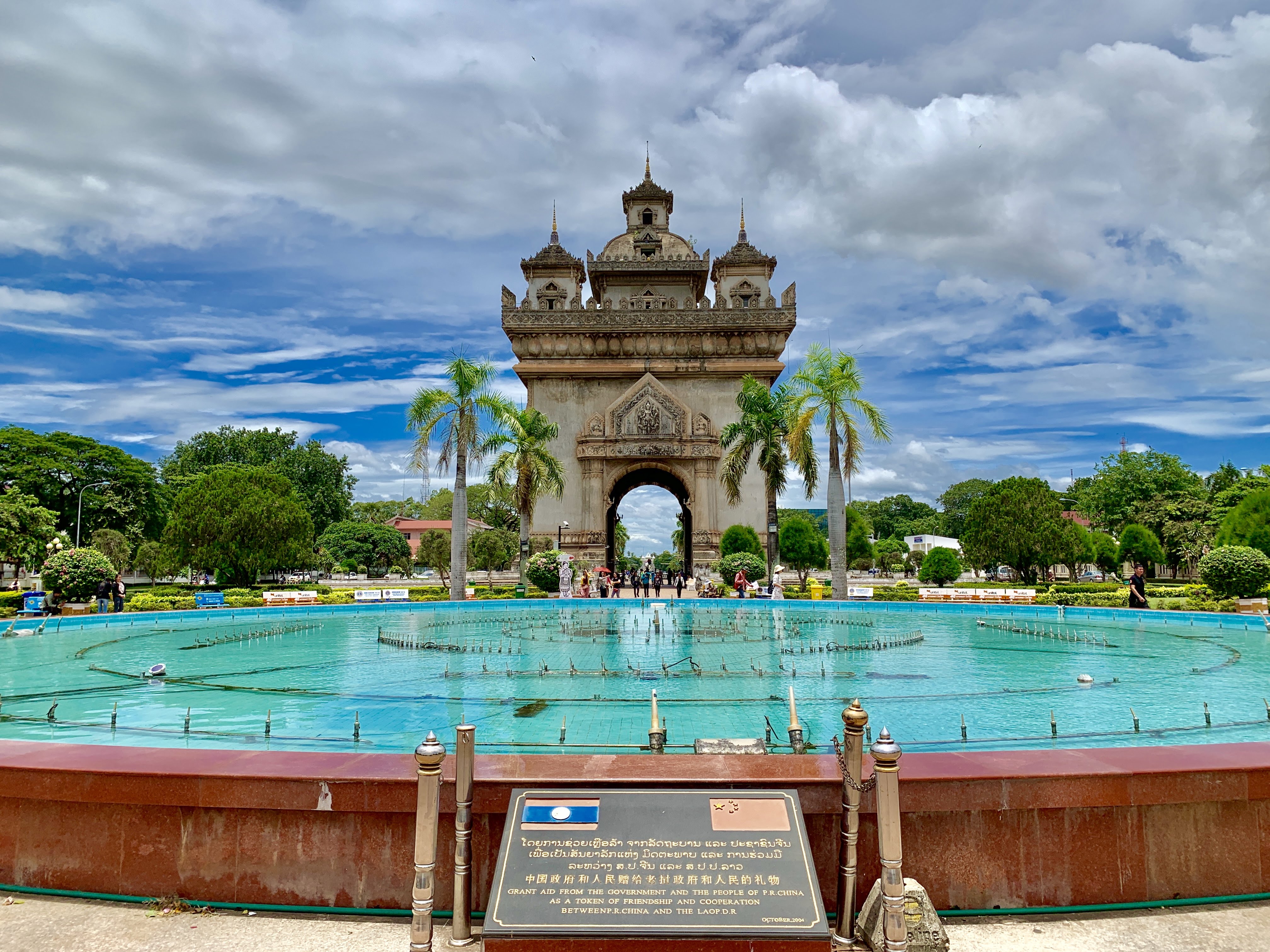
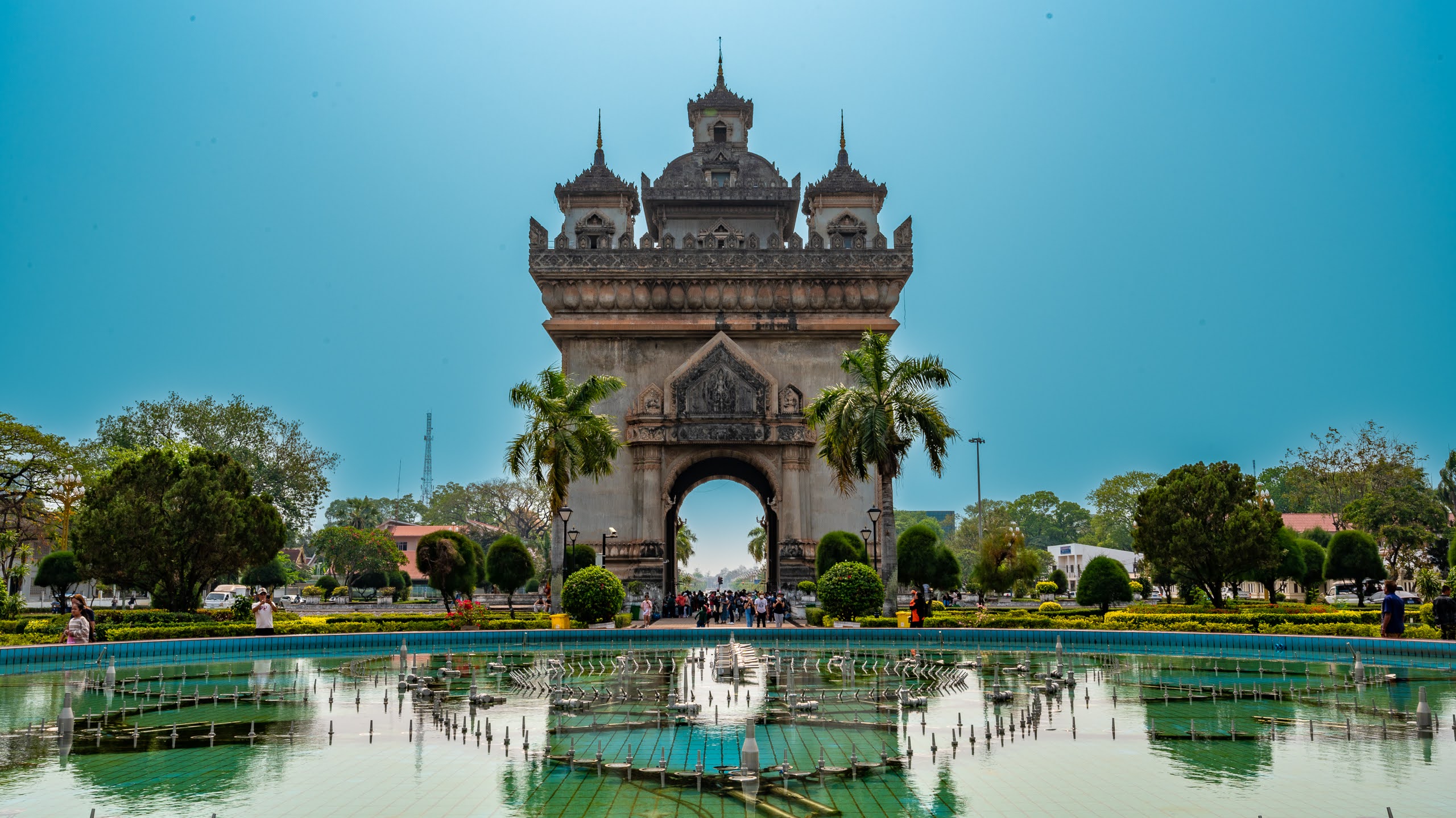
Patuxai — literally 'Victory Gate' — is Vientiane's best-known monument: a massive war memorial that fuses French triumphal-arch grandeur with distinctly Lao Buddhist and Hindu motifs.
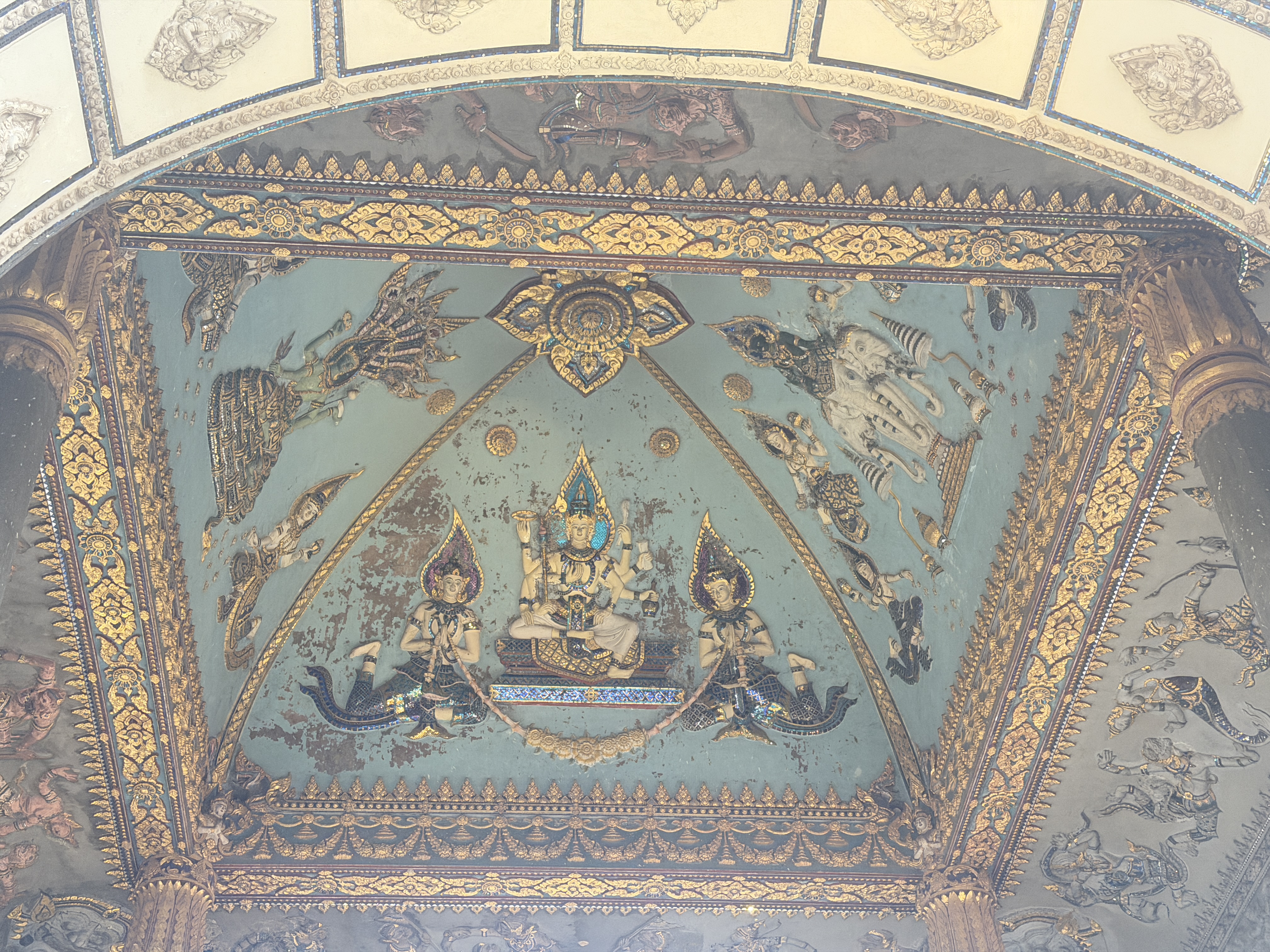
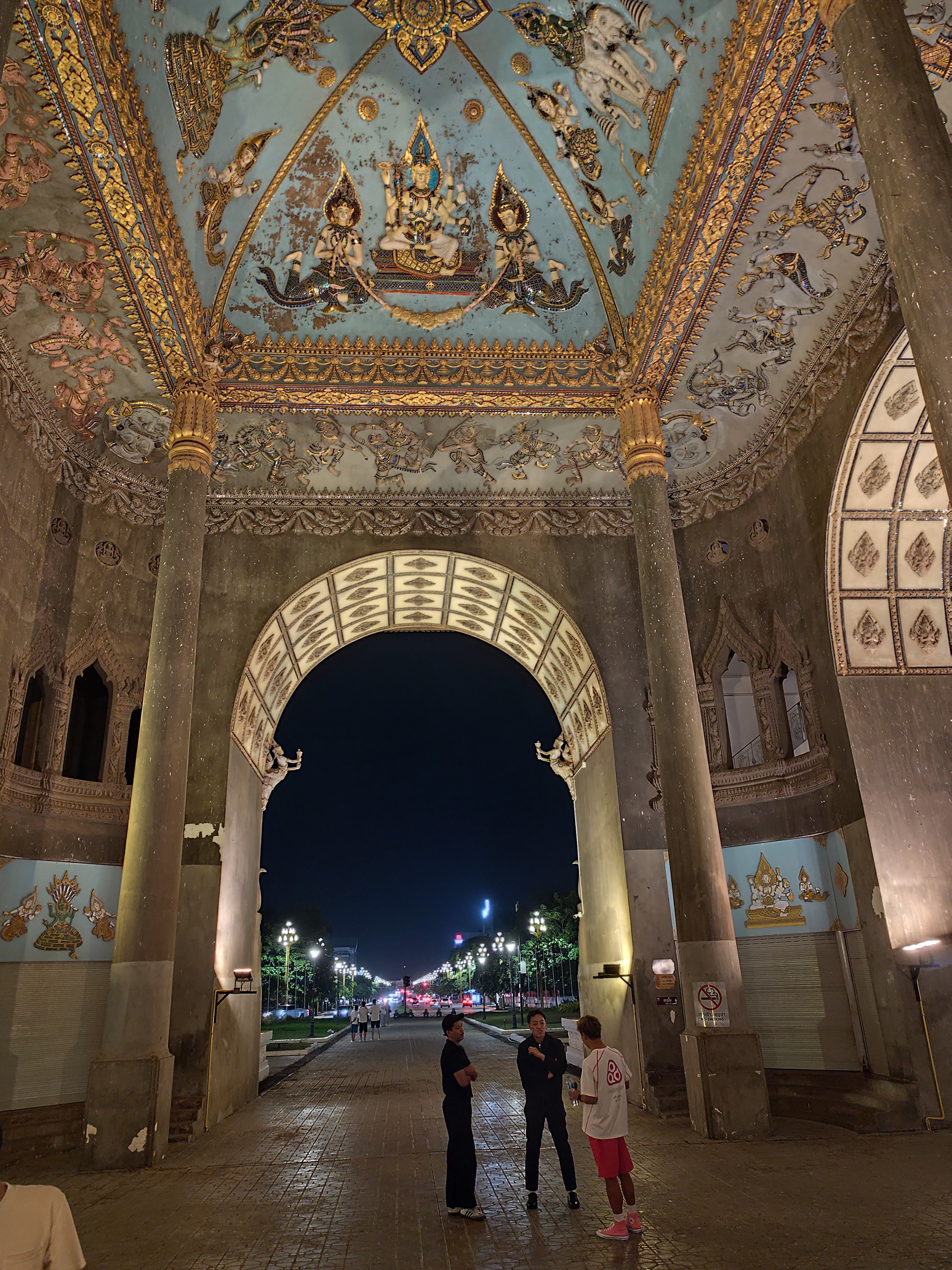
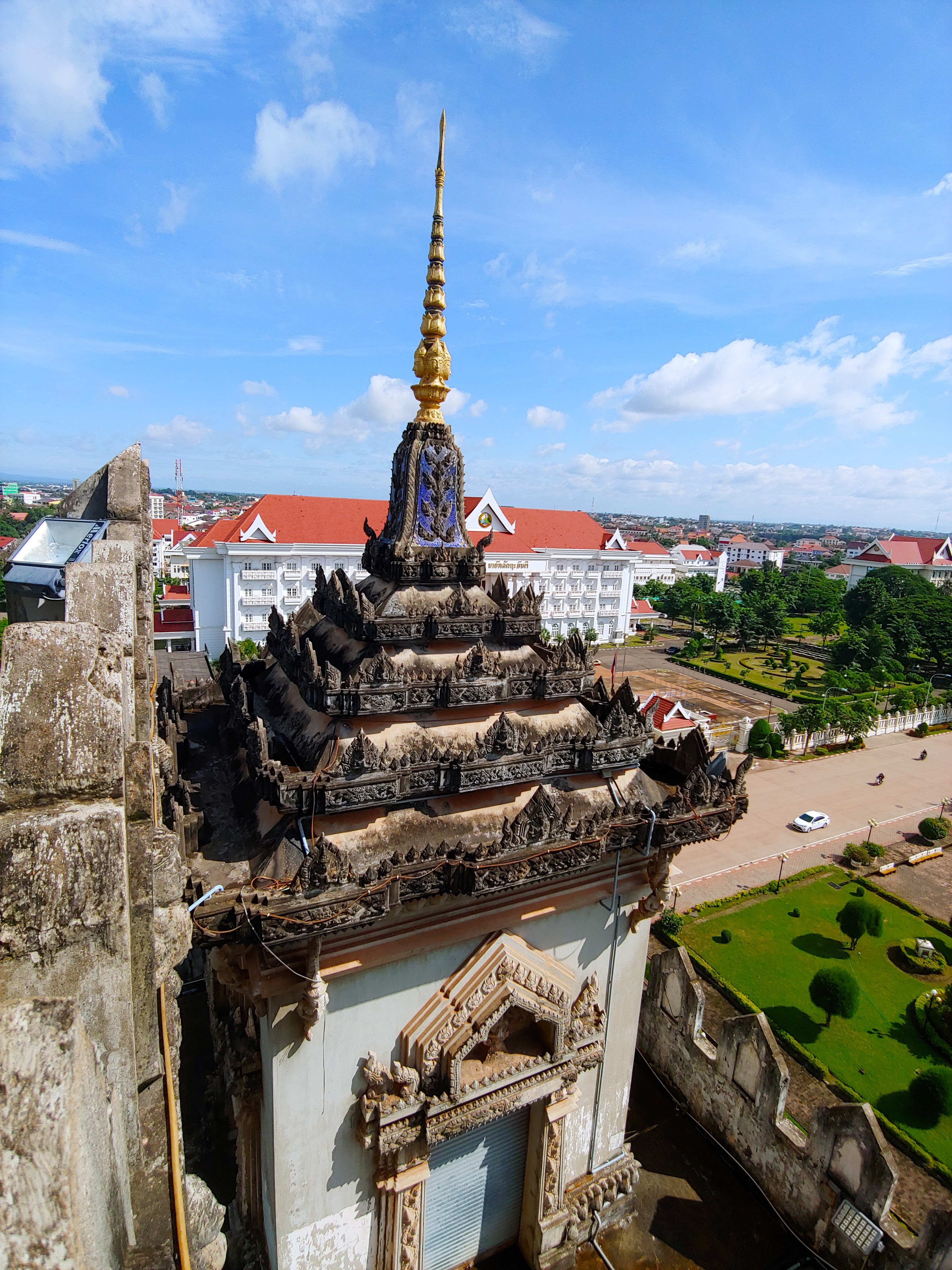
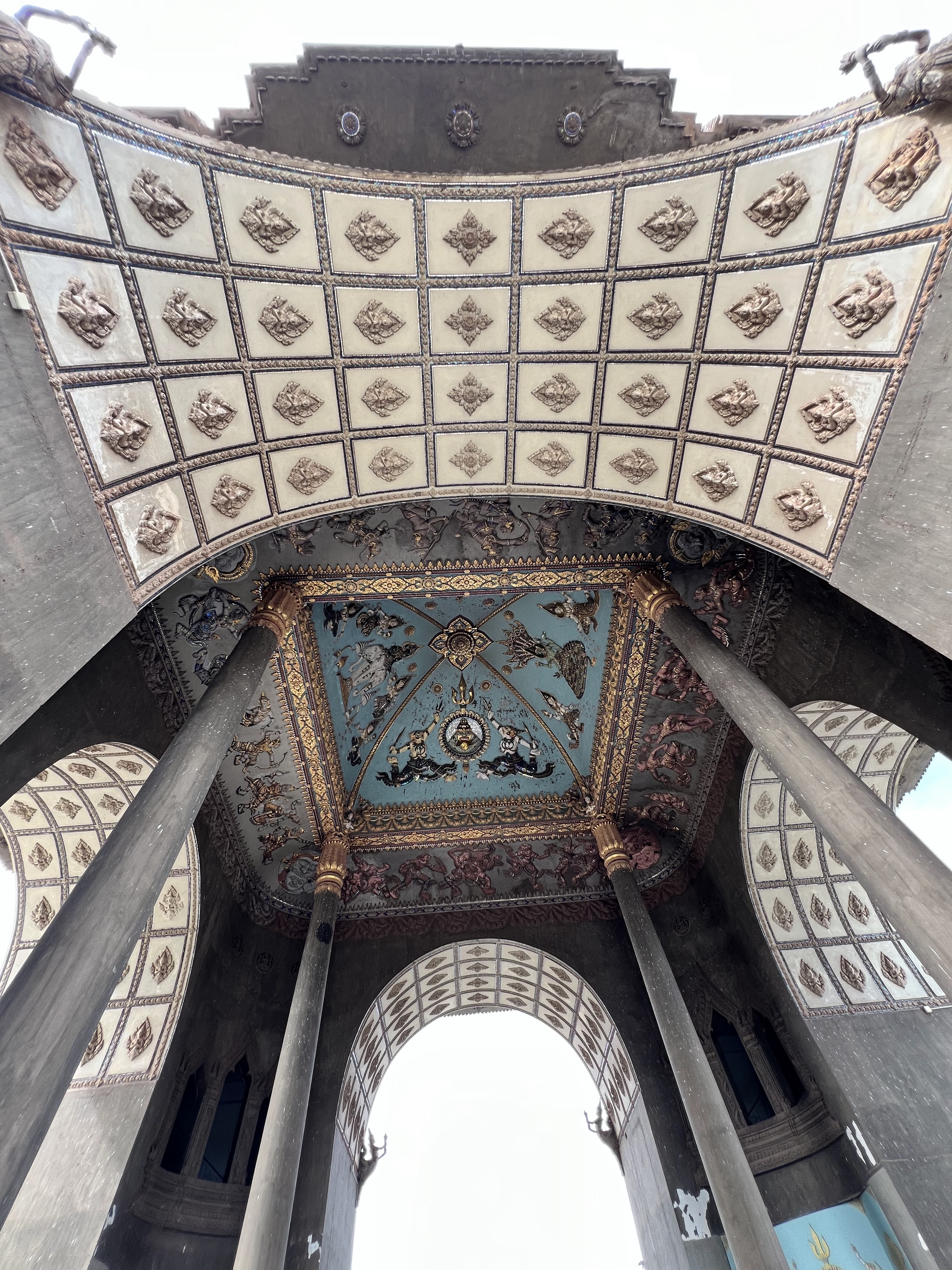
Built between 1957 and 1968, Patuxai was commissioned to honor those who fought for Laos's independence from France. Rather than copy a European monument, Lao architects dressed it in local symbolism: the central spire and four corner towers are topped with kinnari (half-woman, half-bird figures), while naga serpents and lotus buds decorate the arches.
The result is often called 'the Lao Arc de Triomphe'. Walk through the arches and climb the interior staircases to upper galleries and a rooftop platform, where the wide avenues and low skyline of Vientiane spread out below — with the Mekong and, on clear days, the hills of Thailand beyond.
“They used American cement meant for an airport runway — so locals still call it 'the vertical runway'.”
Bring small cash (a few thousand kip) for the climb fee, and come late afternoon for cooler air and the best light.
See the full visit guide →History
A gate built from 'runway cement'
Patuxai's story is tied to Laos's independence, a gift of cement, and a wry national sense of humor.
Independence memorial
After independence from France, the government began a monument commemorating those who died for freedom. Construction started around 1957.
The 'vertical runway'
The US donated cement intended for a new airport runway; it was used for the monument instead — earning the nickname 'the vertical runway'.
Completed 1968
The monument was finished around 1968 and later renamed Patuxai ('Victory Gate') after the 1975 takeover by the Pathet Lao.
Designer Tham Sayasithsena
The monument was designed by Tham Sayasithsena, a self-taught Lao military officer-architect, who completed a scheme blending French monumental form with Lao decorative vocabulary using limited machinery.
Why 'Victory Gate'?
Patuxai combines 'patu' (gate) and 'xai' (victory). It points to Laos's independence and, later, to the 1975 revolution.
Did you know?
Unlike the smooth Arc de Triomphe in Paris, Patuxai is richly ornamented with Lao mythological figures — a statement that this victory belonged to Laos, not to any colonial power.
Myth on the spire
A monument, not a temple
Though the carvings draw on religious imagery, Patuxai is a secular war memorial. The surrounding Patuxai Park, with musical fountains, is a favorite evening spot for local families.
Architecture & Symbolism
French form, Lao soul
Patuxai is most interesting as a meeting point of European monumentalism and Lao decorative tradition.
Three things to look for
When you visit, keep an eye out for these signature details.
Mythical guardians on every tower
- The central and four corner towers are topped with kinnari, not French statues.
- These half-bird, half-woman figures appear throughout Lao temple art.
Serpents and blossoms in the arches
- Naga balustrades guard the stairways, a classic Lao motif.
- Lotus-bud finials echo the decoration of Buddhist stupas.
A tower you can go inside
- Four staircases spiral up to viewing galleries.
- The top platform offers the best 360° view of Vientiane.
Cousins around the world
Patuxai belongs to a global family of triumphal arches and victory monuments.
| Monument | Where & note |
|---|---|
| Arc de Triomphe | Paris, France — the clear model, but smooth and unadorned. |
| India Gate | New Delhi, India — another independence-era arch in a former colony. |
| Siegessäule | Berlin, Germany — a victory column with a climbable platform. |
| Arch of Independence | Ulaanbaatar, Mongolia — a post-independence national monument. |
Design notes
A few facts that make the structure distinctive.
| Feature | Why it matters |
|---|---|
| Orientation | On the central axis of Lane Xang Avenue, facing That Luang to the east. |
| Scale | Broad and low-slung versus Paris's arch, suiting Vientiane's open skyline. |
| Decoration | Ornate Lao reliefs replace its European cousins' neoclassical sculpture. |
A visitor's route through Patuxai
Suggested stops as you explore, from ground to summit. Inside, the tower actually has 7 levels linked by a spiral stair.
Ground arches (Level 1)
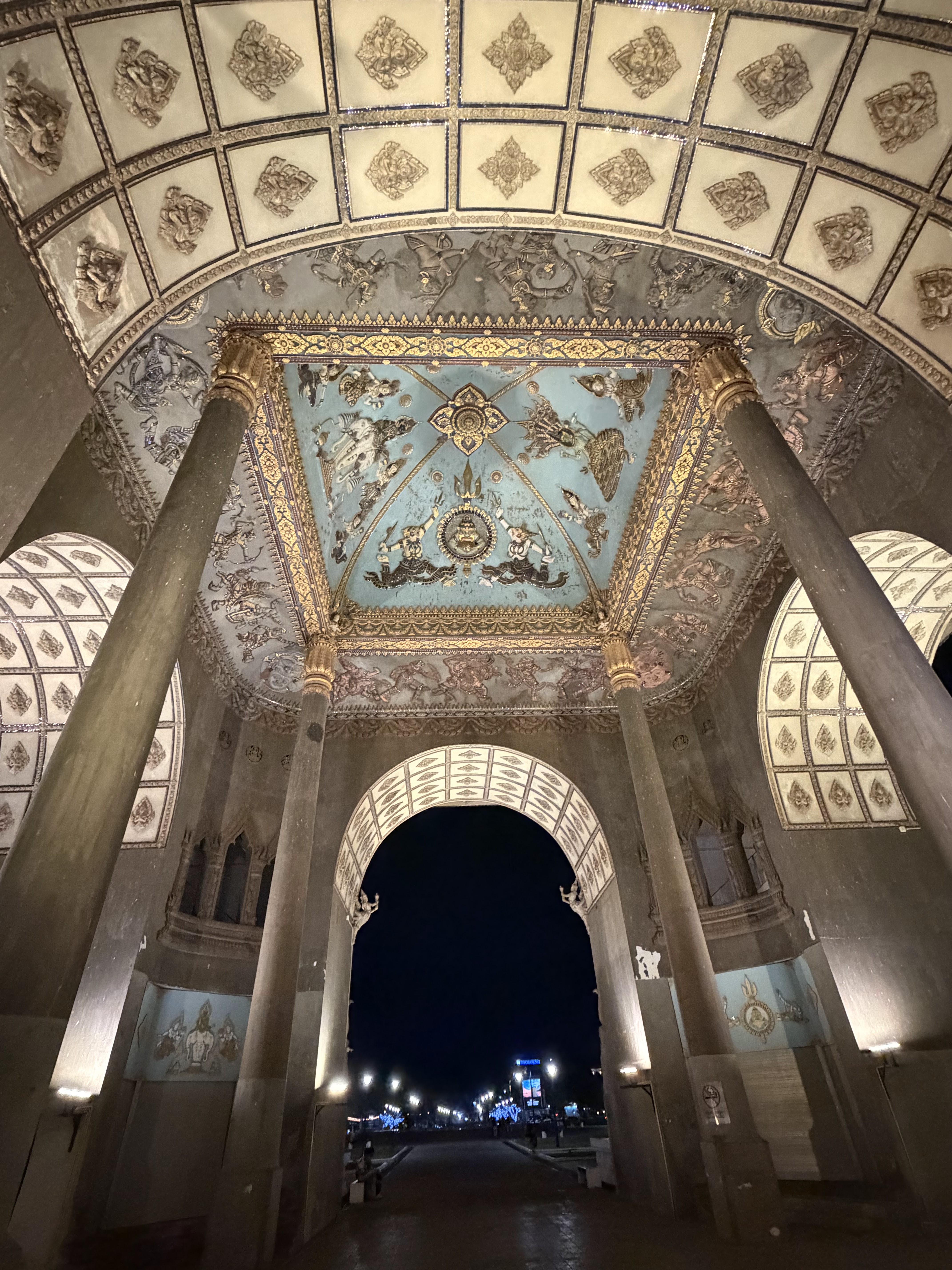
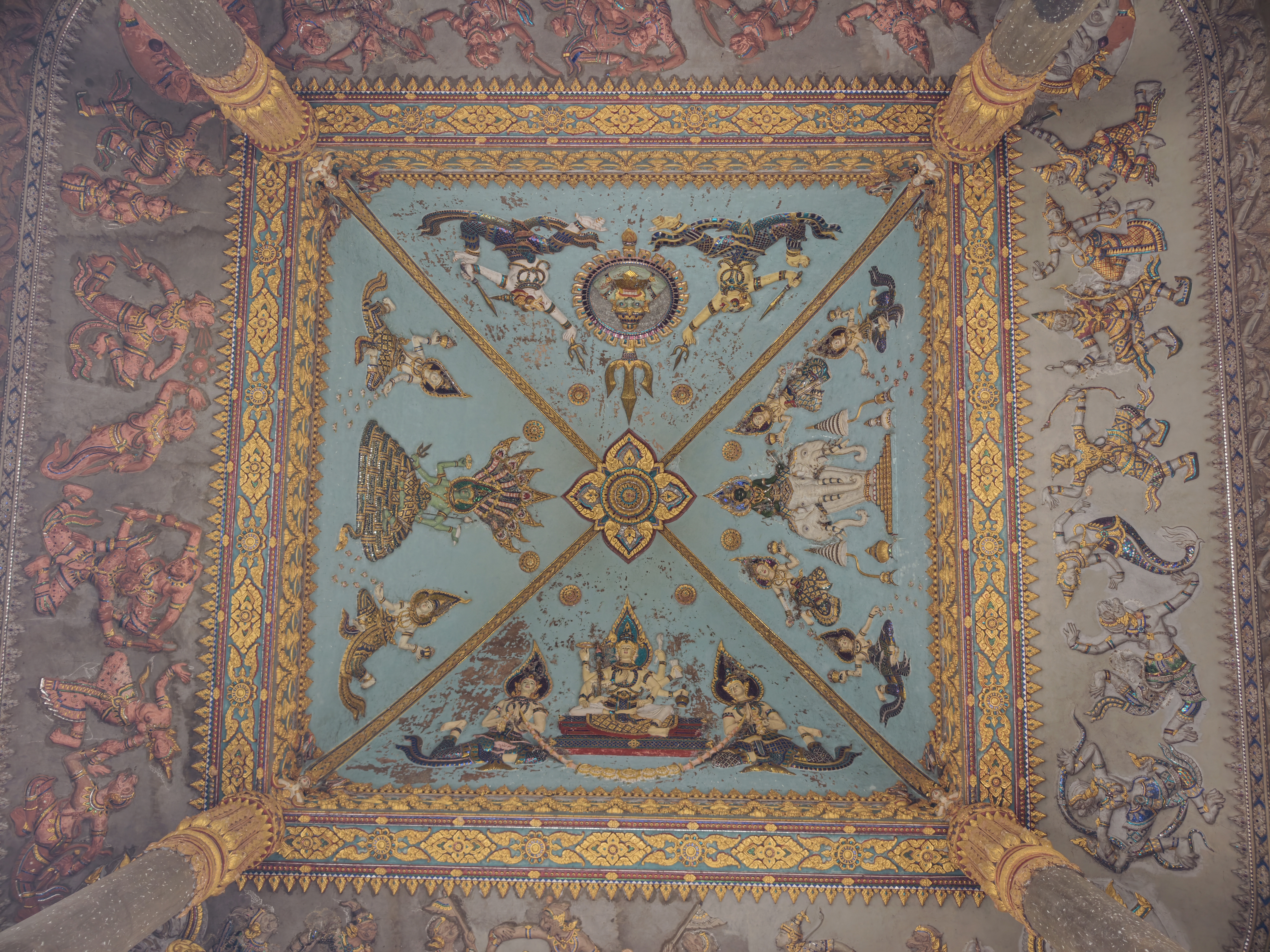
Walk beneath the four arches, read the independence inscriptions, and look up at the Lao mythological reliefs on the spandrels.
Inner spiral stair
Climb the narrow spiral stairs — there is no elevator, so pace yourself.
Levels 2–5: museum & crafts
The middle levels hold a Lao martyrs' memorial and spaces for traditional handicrafts.
Levels 6–7: deck & spire
The top platform and spire bring you close to the kinnari and the 360° view of Vientiane.
Patuxai Park
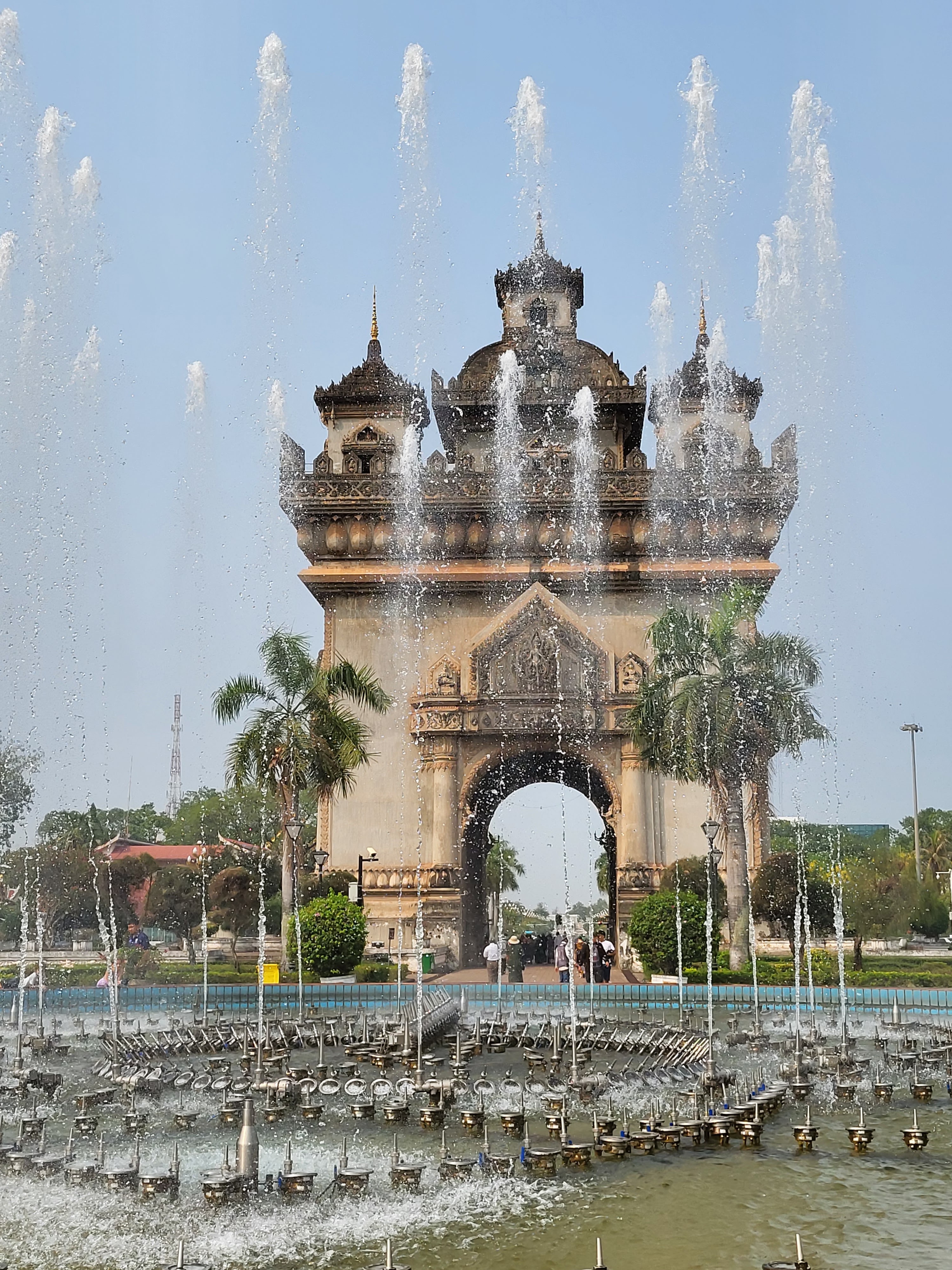
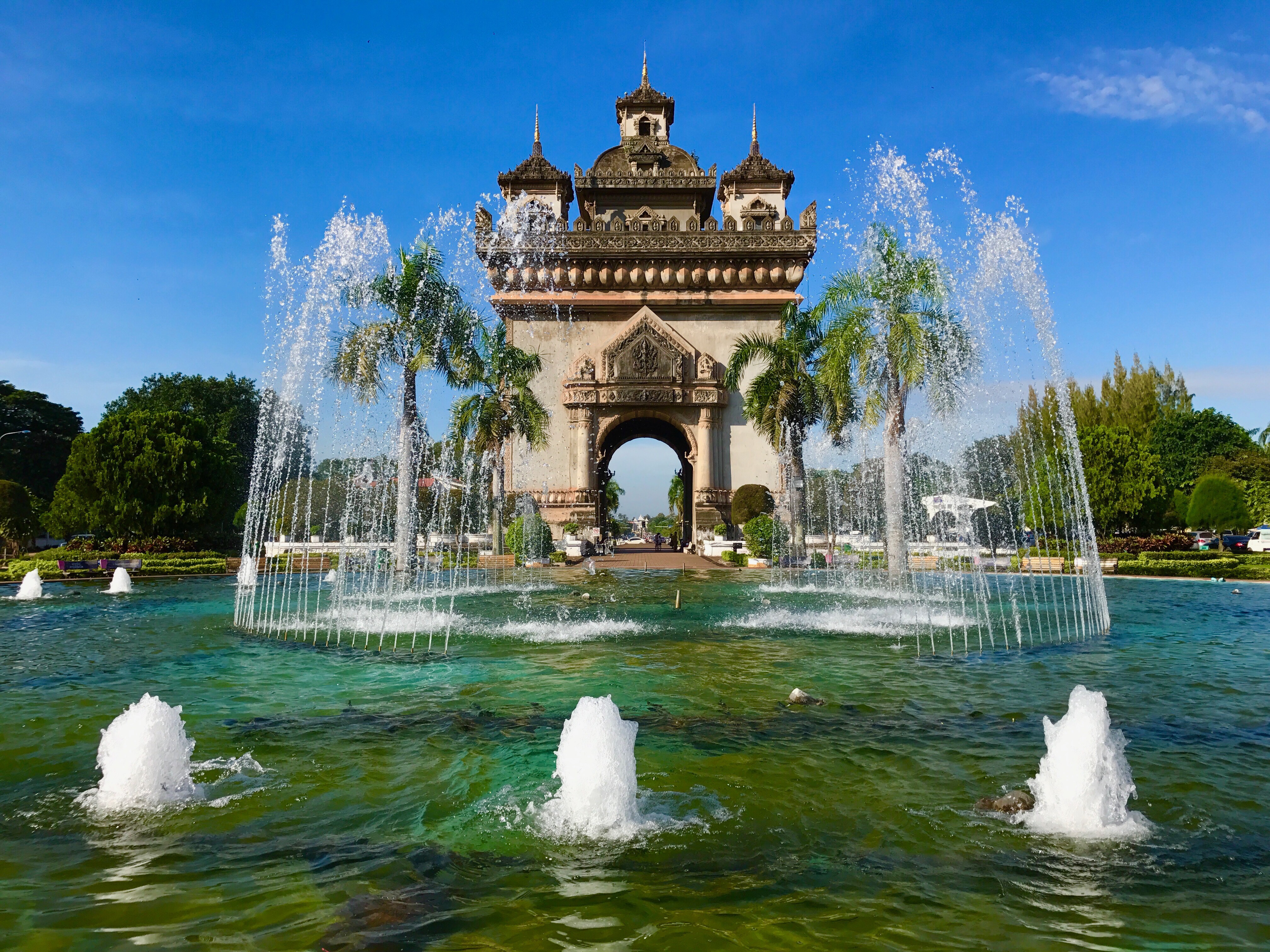
Finish at the fountain gardens across the boulevard; the musical fountain in front was donated by China in 2004 and is a favorite evening spot for locals.
Key dates
- 1957
Groundbreaking
VientianeWork begins on a national independence monument.
- 1960s
The 'runway cement'
VientianeUS-donated cement intended for an airport is used for the structure.
- 1968
Completion
VientianeThe monument is finished and opened to the public.
- 1975
Renamed Patuxai
VientianeAfter the revolution, it is renamed 'Victory Gate'.
Architecture & Symbolism
French shell, Lao soul
Spot the Lao soul beneath the French triumphal-arch shell at a glance.
→ Outside: a French triumphal arch
Symmetric giant arches on four sides
→ Details: Lao heritage
Crowns topped with kinnari — half-bird, half-woman beings
→ Outside: a French triumphal arch
Axis along Champs-Élysées-style Lane Xang Avenue
→ Details: Lao heritage
Naga serpent balustrades guarding the stairways
→ Outside: a French triumphal arch
Massive concrete monumental structure
→ Details: Lao heritage
Spire finished with lotus and stupa forms
Visit Guide
Plan your visit to Patuxai
Everything you need: opening hours, the climb fee, how to get there, the best light for photos, and what to see nearby.
Two ways to enjoy it
You don't have to climb to enjoy Patuxai — but it's worth it.
Families, photographers, casual strollers
Stroll the arches, gardens and fountains at no cost — great for morning exercise and evening light.
Effort: ★· steep stairs
View-seekers, sunset lovers
Pay a small fee at the booth, then climb the spiral stairs to the rooftop panorama.
⚠ Friendly warning
A few touts near the entrance may overstate 'closed' hours or push unofficial 'guide' fees. The monument is open and the climb fee is clearly posted at the booth — ignore anyone who says otherwise.
07:30 – 19:30 daily
- Grounds & parkAlways open
- Tower climb07:30 – 19:30
- Best light16:30 – 18:30
- Fountains showEvenings (seasonal)
What it costs
- Grounds & parkFree to walk around at any time.
- Tower climbA modest fee (around 5,000–30,000 LAK, roughly $0.50–$1.50) — cash only, paid at the booth. Rates change, so check on site.
- CameraUsually included; a small extra charge may apply for video.
How to reach Patuxai
- From Wattay International Airport (VTE)Patuxai is about 5–6 km from Wattay International Airport, Vientiane. At the arrivals hall, take a taxi or use the airport counter (roughly 50,000–80,000 LAK); via Route 13 and Lane Xang Avenue it takes about 15–25 minutes. Alternatively, take city bus 14 to the center, then transfer to a tuk-tuk.
- By tuk-tuk / taxiFrom the city center, a short ride along Lane Xang Avenue; agree the fare first.
- By busSeveral Vientiane city bus lines pass nearby — cheap and frequent.
- On foot / bikeAbout 2 km east of the city center; flat, shaded and walkable.
Photography & golden hour
Patuxai is photogenic from every angle — here is how to catch the best light.
Best light windows
Soft, even light on the east face; few crowds.
Warm light rakes across the reliefs — best for texture.
The monument and fountains glow after sunset; bring a tripod.
Photo spots
Symmetrical shot down Lane Xang Avenue toward the arch.
Stand in the middle of the boulevard (safely) for the classic framing.
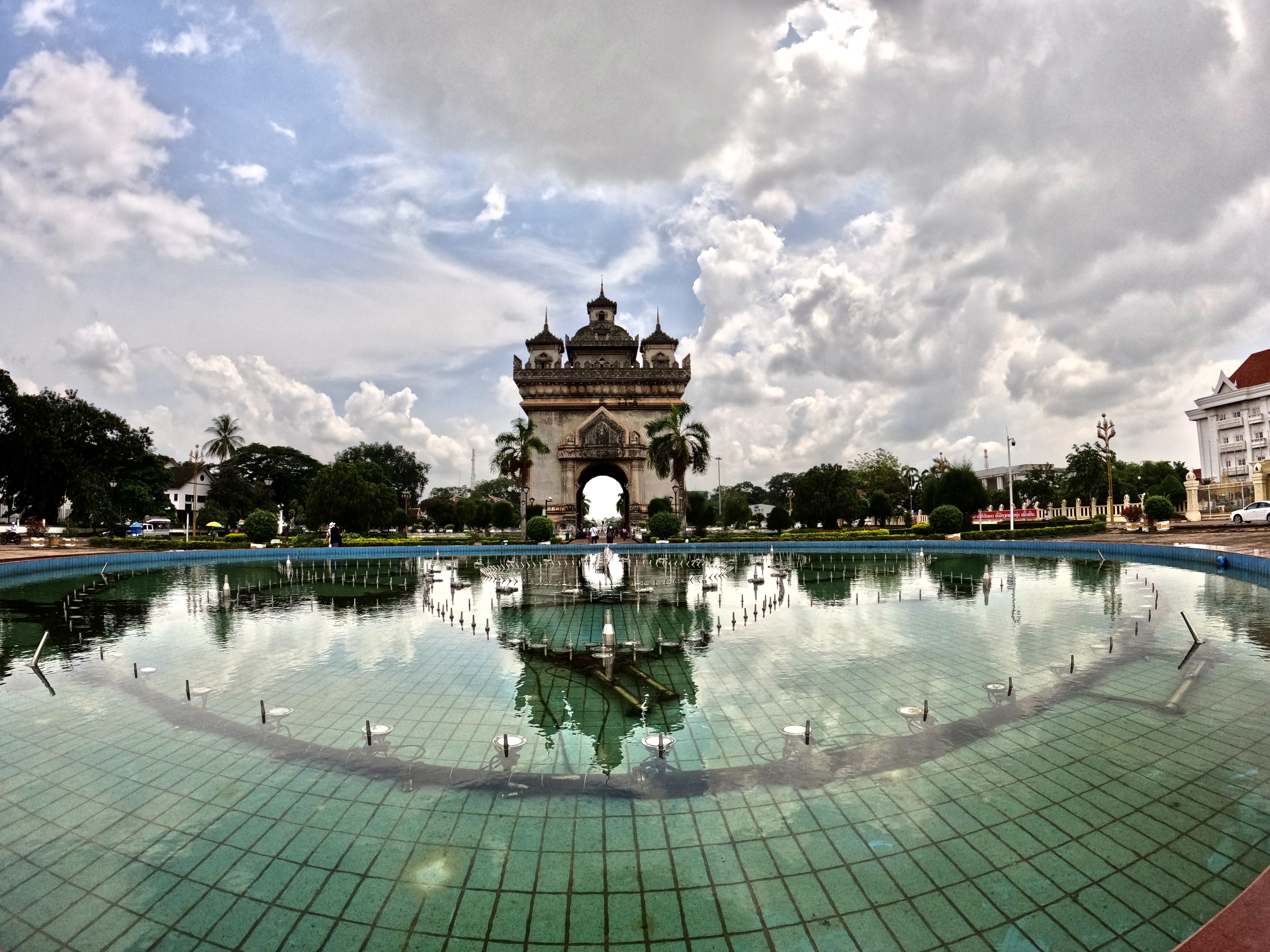
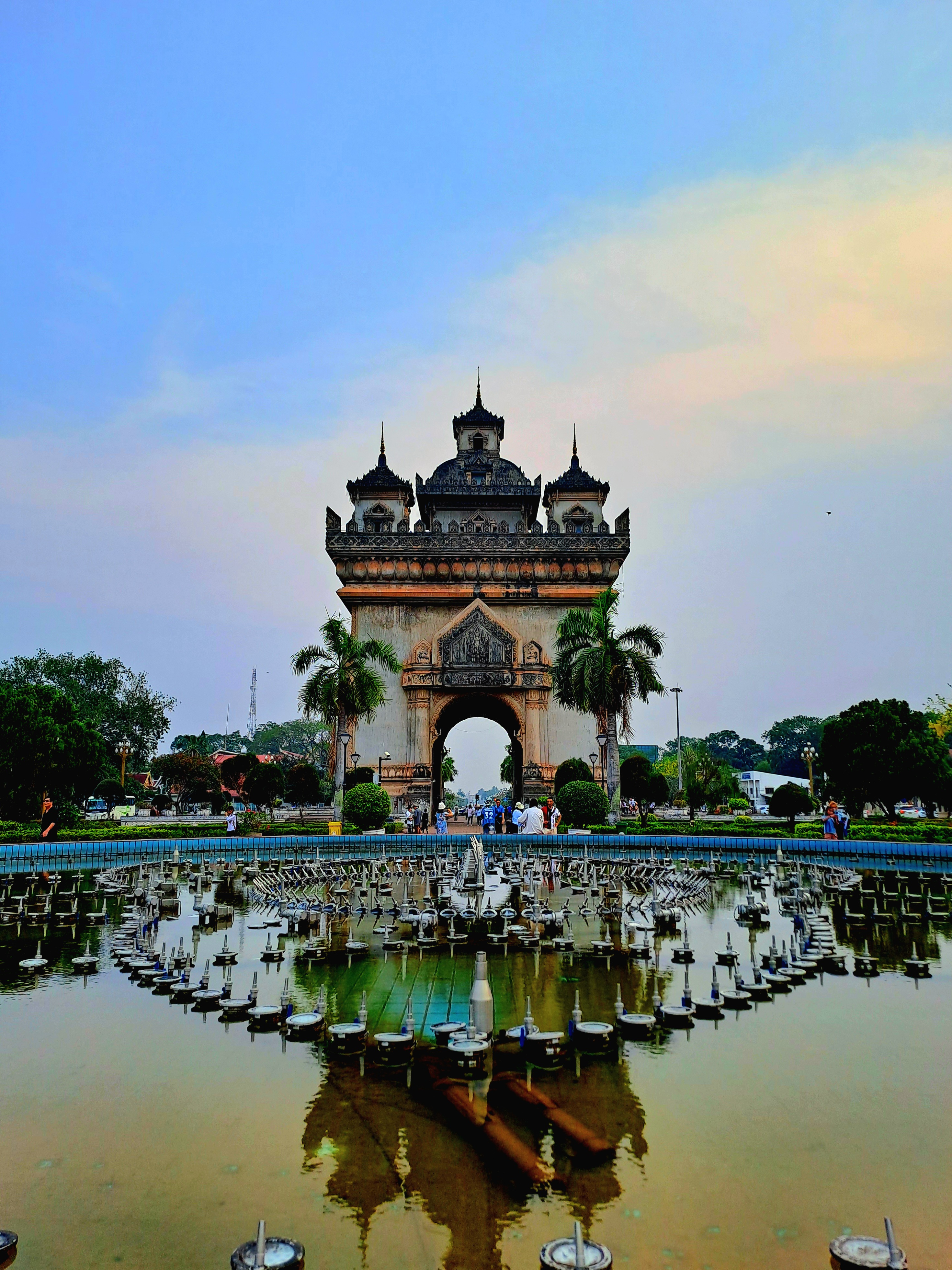
Patuxai reflected in the park pools at dusk.
Lower your angle to include water and the lit spires.
360° panorama of Vientiane and the Mekong.
Use a wide lens; watch the railings in frame.
Camera & phone settings
f/8–11, ISO 100, 16–24 mm
0.5× wide, tap to expose the sky
f/8, 2–5 s, tripod
Night mode, steady hands
50–85 mm, f/4
2× zoom, get close to reliefs
Quick tips
- Visit on a clear day for the distant Mekong view from the top.
- Come 90 minutes before sunset for golden hour on the west face.
- The spiral stairs are narrow — travel light and wear good shoes.
Best time of year
Vientiane has three rough seasons; the cool, dry months are most comfortable.
Best window
Pleasant 20–30°C days, low humidity — ideal for climbing and photos.
Very hot
40°C+ can make the open stair climb brutal; go early or after 16:00.
Green & quiet
Afternoon showers; mornings are usually clear and the park is lush.
Stay safe
- Stairs — The spiral staircases are steep and dim — use the handrail and watch your step.
- Heat — Carry water; the open top deck has little shade at midday.
- Belongings — Keep valuables close in busy periods and around the stalls.
🌫 Burning-season note
From roughly February to April, regional haze can soften distant views. Mornings are usually clearer, and the monument itself is unaffected.
Accessibility
The grounds are largely flat and open, but the tower climb is not step-free.
- Ground level — Paved, step-free paths around the arches and park — wheelchair and stroller friendly.
- Tower — Only via steep spiral stairs; not suitable for mobility aids. Views are also enjoyable from the park.
- Restrooms — Public toilets are available near the entrance and park.
⚠ Climbing tips
There is no elevator; you climb 150+ narrow spiral steps. Midday to 15:00 the top is unshaded and the concrete and metal get very hot. Climb after 16:30 for cooler air and better light.
👕 Etiquette
Although rich with Buddhist imagery, Patuxai is a secular national monument, not a wat (temple) — shorts are fine. As a national symbol, modest dress is still appreciated.
Frequently asked questions
Is Patuxai free to enter? +
The grounds and park are free. Climbing the tower costs a small posted fee (cash at the booth).
How long should I spend? +
About 45–90 minutes: 20 minutes at the base and gardens, plus the climb and rooftop.
When is the best time to visit? +
Late afternoon (16:30–18:30) for cooler air and sunset light; November–February for the most comfortable weather.
Can I see it without climbing? +
Yes — the arches, gardens and fountains are free and photogenic, and the view can be enjoyed from the park.
What should I wear? +
Light, respectful clothing is fine; it is a civic monument, not a temple, so no strict dress code.
Where is Patuxai located? +
Patuxai is located on Lane Xang Avenue in central Vientiane, Vientiane Capital, Laos — about 2 km east of the old town and a short ride from the Mekong riverfront.
What is there to see near Patuxai? +
Near Patuxai you can easily visit That Luang (the Great Stupa), Wat Si Saket, Haw Phra Kaew, the Mekong riverfront, the COPE Visitor Centre and the Lao National Museum, all within a few kilometres.
Near Patuxai
Laos's most sacred monument, about 2 km east.
→ ExploreVientiane's oldest surviving temple, with thousands of Buddha images.
→ ExploreFormer royal temple and museum near the city center.
→ ExploreSunset promenade with food stalls, 2.5 km southwest.
→ ExploreMoving museum on Laos's UXO history, near the avenue.
→ ExploreOverview of Lao history and independence, central Vientiane.
→ ExploreNearby Eats
What to eat near Patuxai
Vientiane's food scene is around the corner — from dawn markets to riverside barbecue.
Comforting Lao noodle soup with hand-pulled noodles — a classic breakfast.
Lao baguette sandwich (French-colonial legacy) with pâté, herbs and chili.
Fish steamed in banana leaves with lemongrass and dill.
Grilled chicken or pork skewers with sticky rice — street-food staples.
Iced tropical fruit shakes to beat the heat.
“In Vientiane you eat French bread in the morning and Lao grilled food by the river at night — Patuxai sits right between those worlds.”
Photos
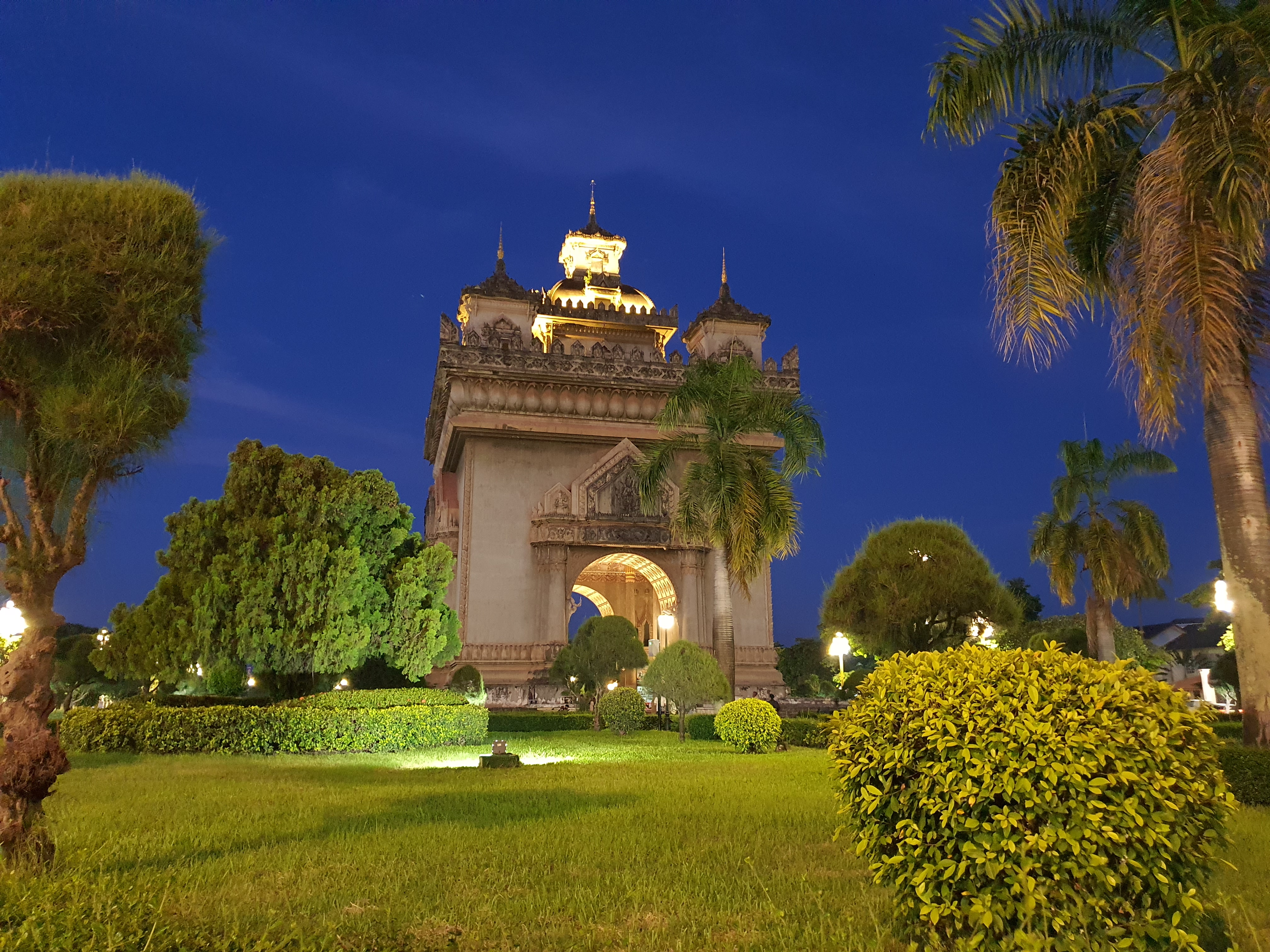
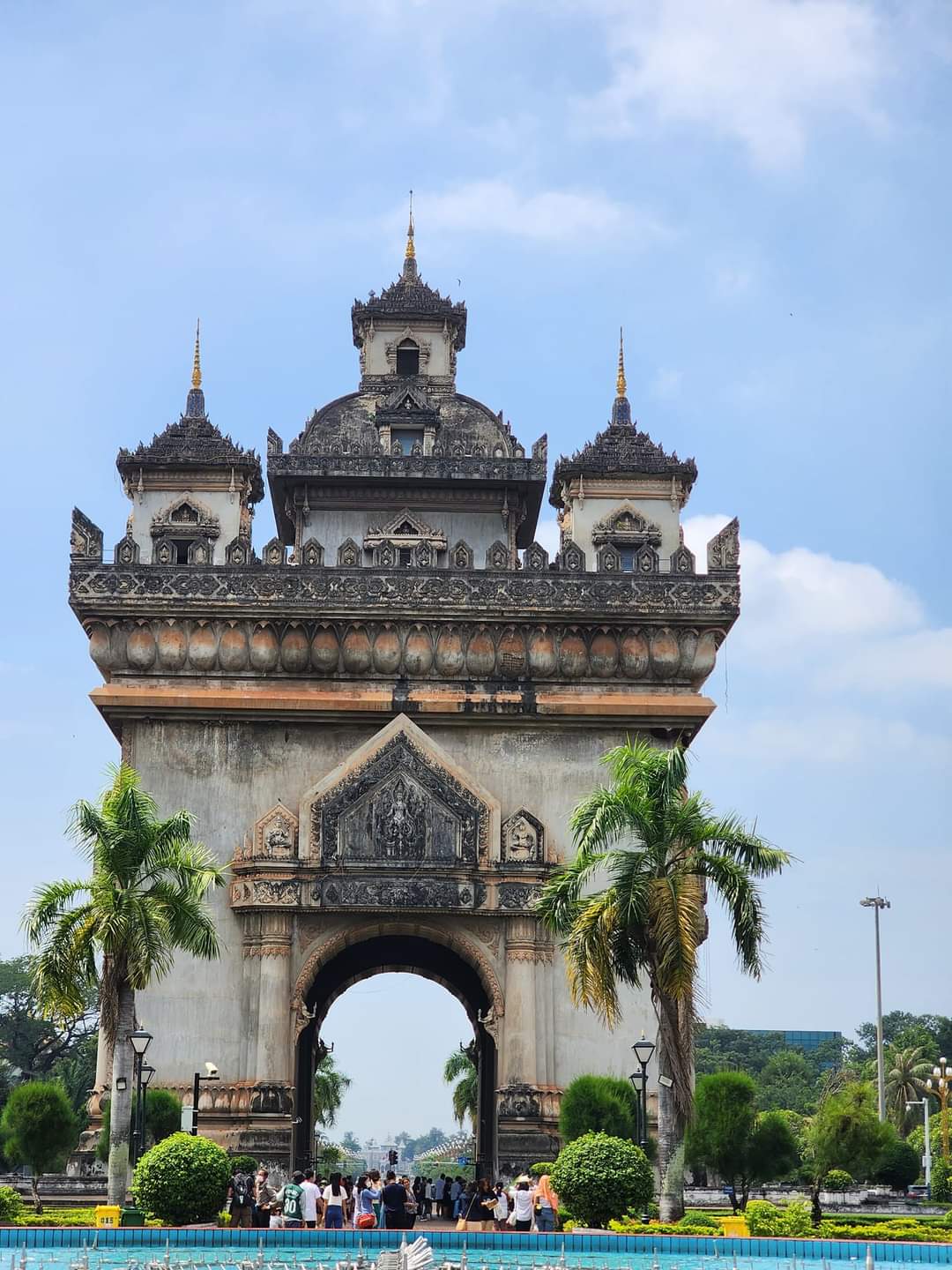
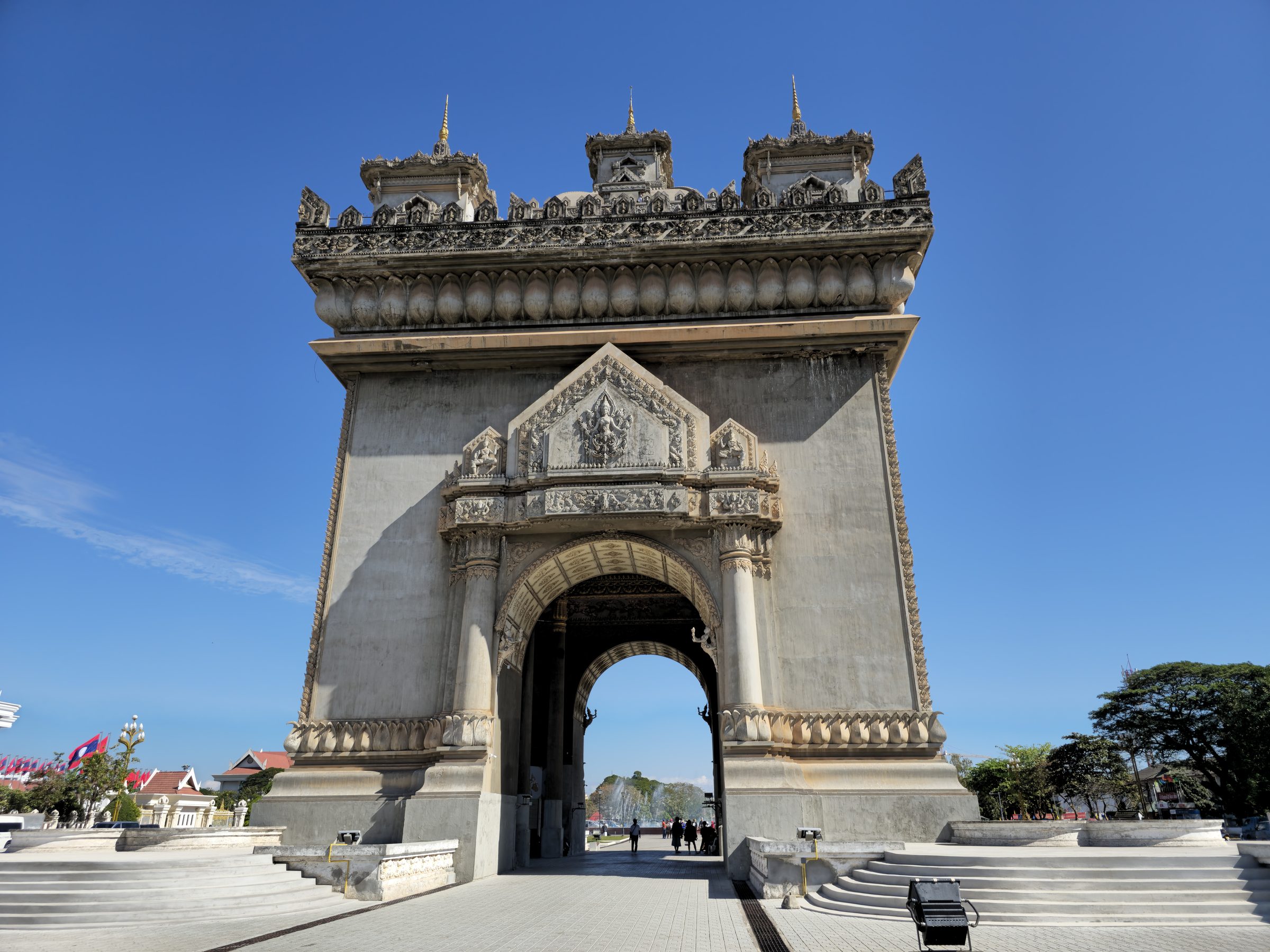
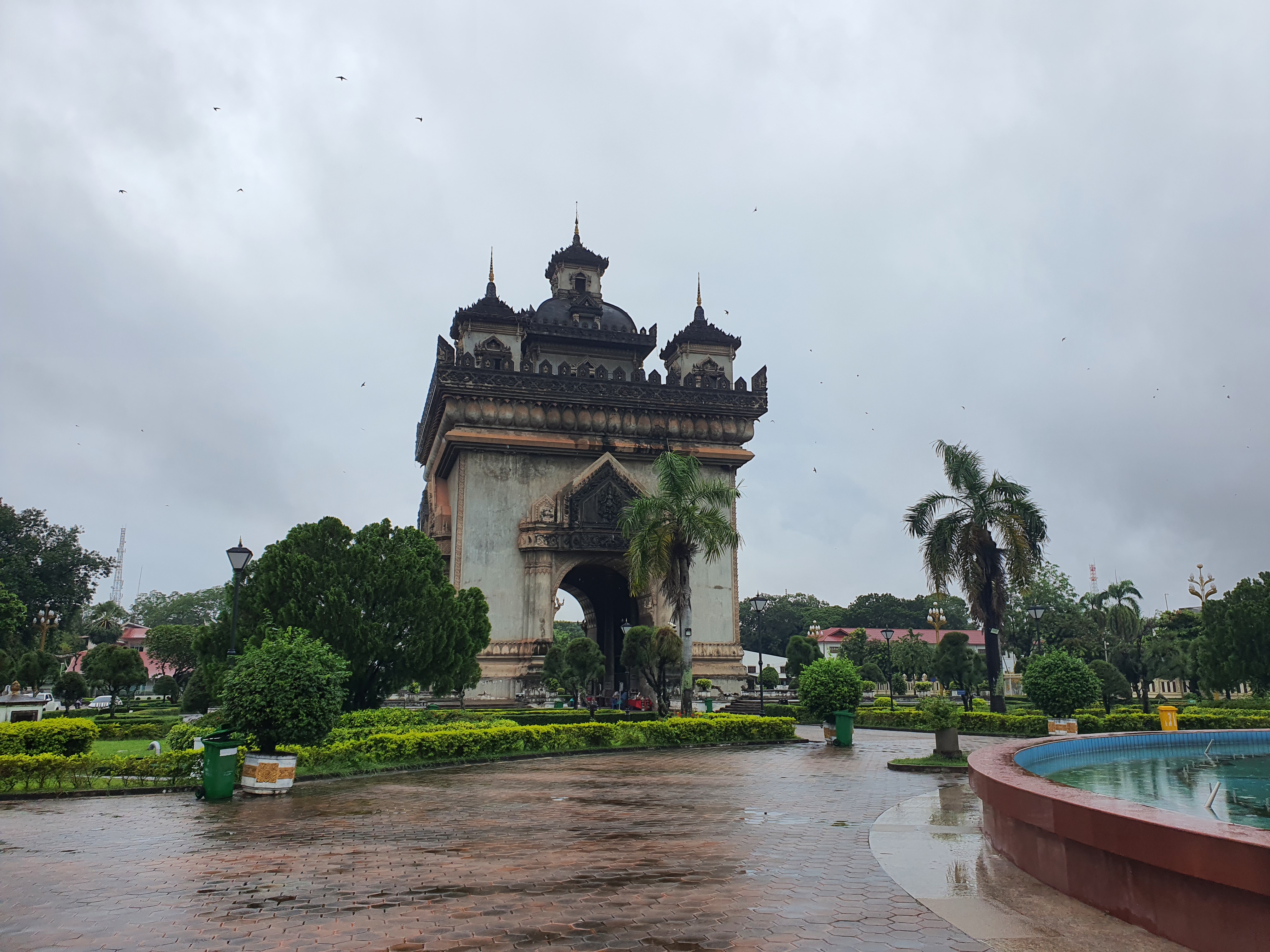
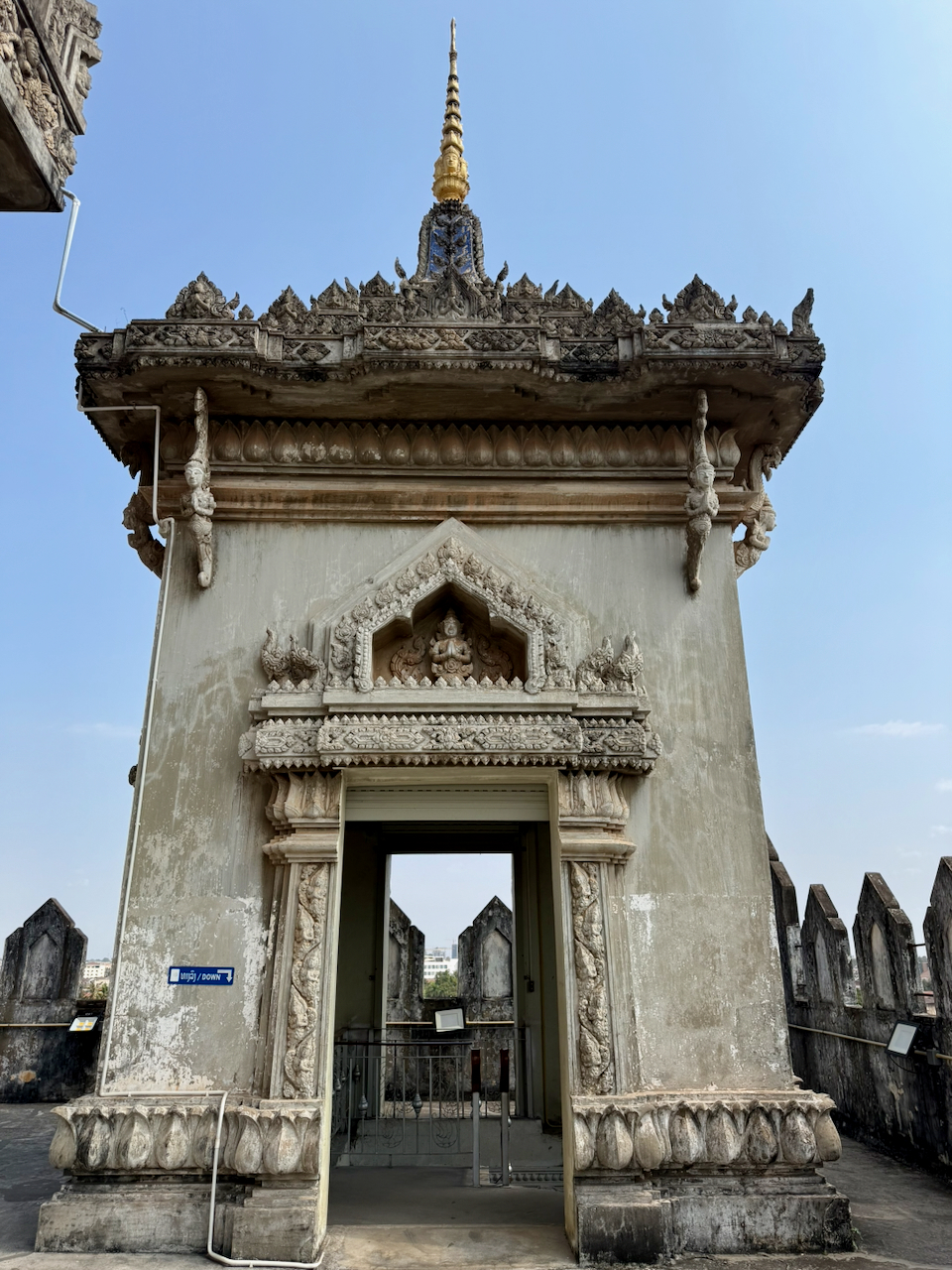
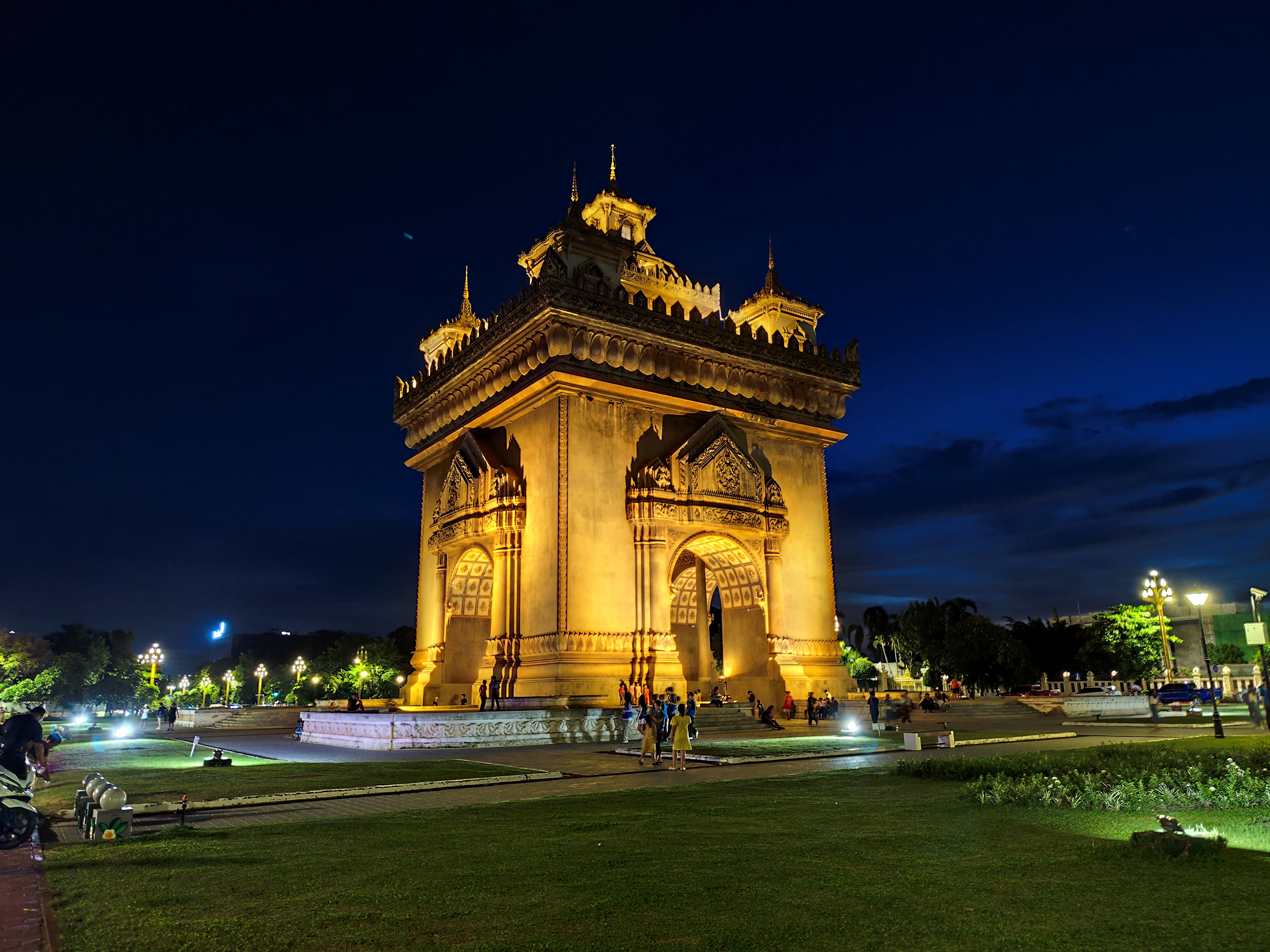
Patuxai in pictures
A look at the monument, its reliefs and the park that surrounds it.
Photos are for illustration; the structure and gardens have changed over the decades.
Images via Google Maps user contributions.
Reviews
What visitors say
A snapshot of traveler impressions from public review platforms.
This site is independent and not affiliated with any review platform.
The rooftop panorama at golden hour is spectacular — go just before sunset.
Small fee to go up; the stairs are steep but the city view is great.
Loved walking the arches and fountains without paying anything.
Symmetrical shots down the avenue are stunning in the morning light.
The interior is a bit worn, but the symbolism and view make up for it.
The evening fountain show and families in the park were a highlight.
Flat, walkable, and close to other Vientiane sights.
Loved comparing it to the Arc de Triomphe — same idea, very different detail.
Sources
Sources & corrections
We aim for accuracy. The information here is drawn from public references and local knowledge.
Key facts
Built 1957–1968; commemorates Lao independence; located on Lane Xang Avenue, Vientiane. Hours and fees are indicative and may change — verify on site.
Spot an error?
This guide is community-maintained. If you notice outdated or incorrect information, please let us know.
Send a correction© 2026 © 2026 Patuxai Visitor Guide.
Location
Find Patuxai
On Lane Xang Avenue in central Vientiane, a short ride from the old town and the Mekong.
📍 Ave Lane Xang, Vientiane 01000, Laos
🧭 XJC9+6F Vientiane, Laos
🌐 17.9705° N, 102.6140° E
Getting here
Tuk-tuks and taxis run along Lane Xang Avenue; city buses stop nearby, and it is a flat 2 km walk from the city center.
Weather
Current weather & 7-day forecast
Live conditions and the coming week's outlook for Patuxai and central Vientiane, so you can plan the best time to climb the tower and enjoy the park.
Drizzle 25–33° · 紫外线Very high · Gentle breeze
- Feels like
- 37°
- Humidity
- 55%
- Wind
- 8 km/h E
- Chance of rain
- 74%
Temperatures in °C · Wind in km/h
👕 What to wear
- • There's a good chance of rain — bring an umbrella or raincoat just in case.
- • Light rain — pavements get slippery, watch your step.
- • It's hot — try to avoid being out at midday.
- • Strong UV — protect your skin.
🗺️ Best time to explore
- • Favor indoor spots; postpone hill walks and water activities.
- • Open-air activities are less fun in the drizzle; time them between showers.
- • Shorten outdoor time and rest in the shade.
🎒 What to bring
- • Umbrella / raincoat
- • Folding umbrella
- • Sun protection, plenty of water, heat-relief gear
- • Sunscreen, sunglasses, sun hat
Live weather is briefly unavailable. Vientiane is typically hot and humid, with a rainy season from May to October.